
Trader Joe's: A Legacy in Motion
Trader Joe's: A Legacy in Motion
"Trader Joe’s Story: A Legacy in Motion" is an interactive storytelling installation designed for the Trader Joe’s Pop-Up Shop that explores the history of the brand. This project combines the physical with the digital to create a unique viewing experience.
"Trader Joe’s Story: A Legacy in Motion" is an interactive storytelling installation designed for the Trader Joe’s Pop-Up Shop that explores the history of the brand. This project combines the physical with the digital to create a unique viewing experience.
Timeline: January - May 2025
"Trader Joe’s Story: A Legacy in Motion" is an interactive storytelling installation designed for the Trader Joe’s Pop-Up Shop that explores the history of the brand. This project combines the physical with the digital to create a unique viewing experience.
Trader Joe’s is widely recognized for its commitment to sustainability and authenticity, presenting a unique opportunity to deepen customer engagement through immersive storytelling and interactive experiences. By bringing the brand’s history to life in a dynamic way, this initiative can foster a stronger emotional connection with customers, enhance brand loyalty, and create a more engaging shopping experience.
Trader Joe’s is widely recognized for its commitment to sustainability and authenticity, presenting a unique opportunity to deepen customer engagement through immersive storytelling and interactive experiences. By bringing the brand’s history to life in a dynamic way, this initiative can foster a stronger emotional connection with customers, enhance brand loyalty, and create a more engaging shopping experience.
Trader Joe’s is widely recognized for its commitment to sustainability and authenticity, presenting a unique opportunity to deepen customer engagement through immersive storytelling and interactive experiences. By bringing the brand’s history to life in a dynamic way, this initiative can foster a stronger emotional connection with customers, enhance brand loyalty, and create a more engaging shopping experience.
The Challenge:
The Challenge:
How can Trader Joe’s history turn into an engaging experience?
How can Trader Joe’s history turn into an engaging experience?
Focusing on the Goals
Focusing on the Goals
In initial concept of my project, three major goals were kept in mind:
Telling the story of Trader Joe's in a way that reflects the
brand's identity
Deliver an engaging experience at the pop-up shop
Utilize projection mapping to combine physical Trader Joe's objects with digital information
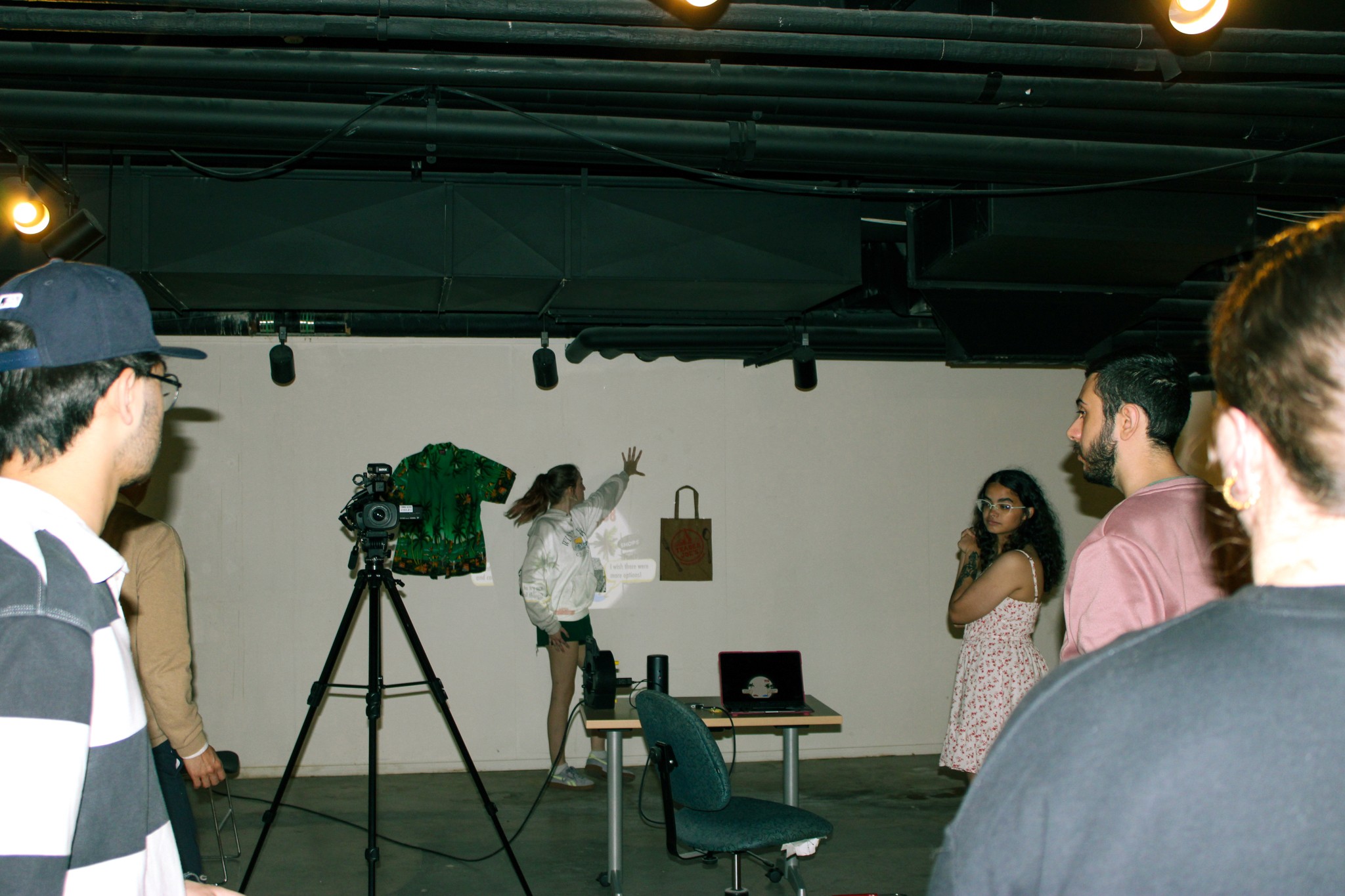
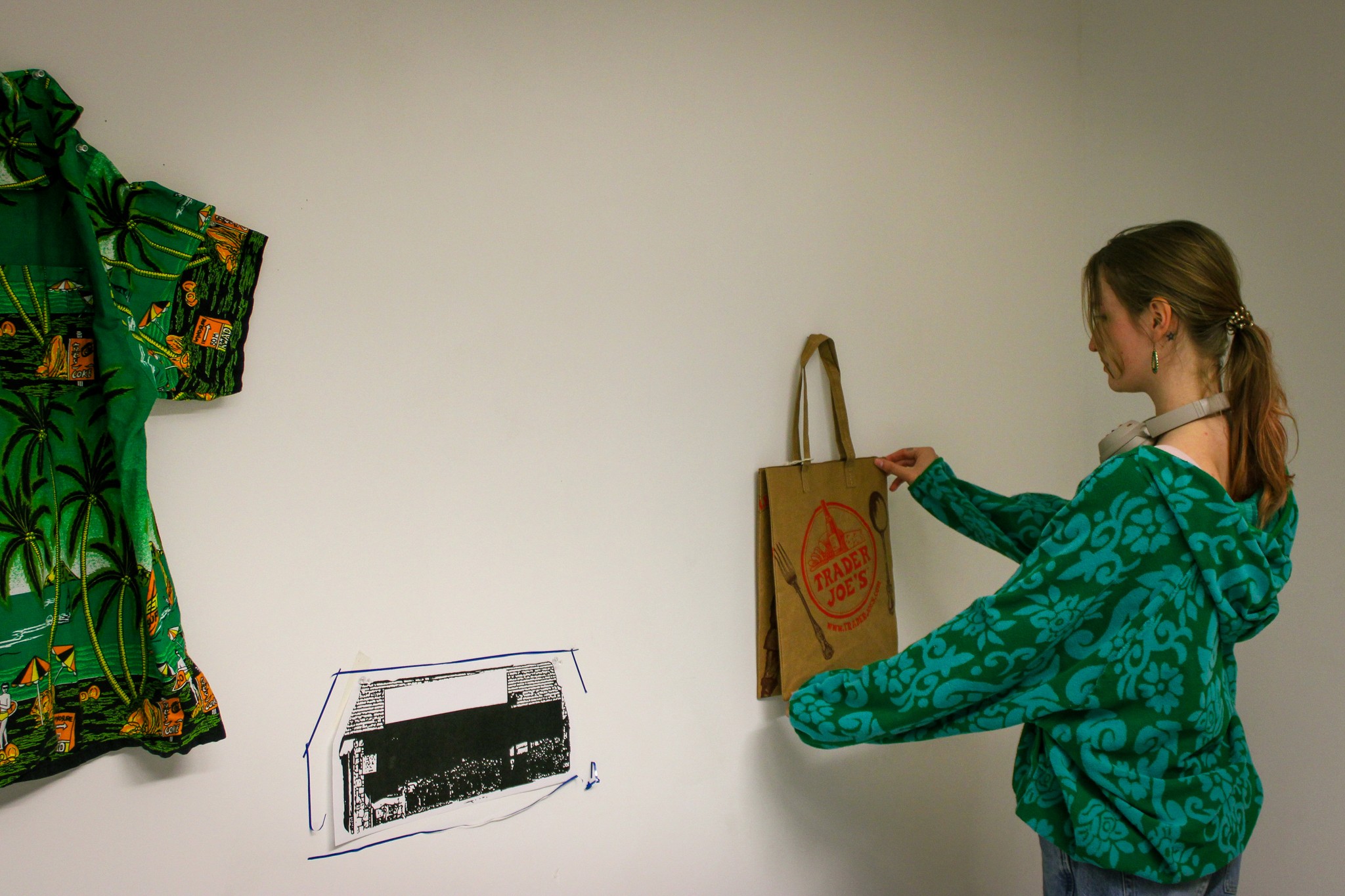
The story of the company’s origins and growth needed to be told in a way that felt immersive and true to its quirky, handmade identity. Instead of relying on traditional screens or touch interfaces, I used projection mapping to animate familiar Trader Joe’s objects—like a Hawaiian shirt, a store model, and a paper bag—transforming them into unexpected storytelling surfaces.
The experience was designed to be playful and approachable, inviting visitors to discover the brand’s history through movement, light, and curiosity, all within the context of a pop-up retail space.
In initial concept of my project, three major goals were kept in mind:
Telling the story of Trader Joe's in a way that reflects the
brand's identity
Deliver an engaging experience at the pop-up shop
Utilize projection mapping to combine physical Trader Joe's objects with digital information
The story of the company’s origins and growth needed to be told in a way that felt immersive and true to its quirky, handmade identity. Instead of relying on traditional screens or touch interfaces, I used projection mapping to animate familiar Trader Joe’s objects—like a Hawaiian shirt, a store model, and a paper bag—transforming them into unexpected storytelling surfaces.
The experience was designed to be playful and approachable, inviting visitors to discover the brand’s history through movement, light, and curiosity, all within the context of a pop-up retail space.
How would people react to this experience?
How would people react to this experience?
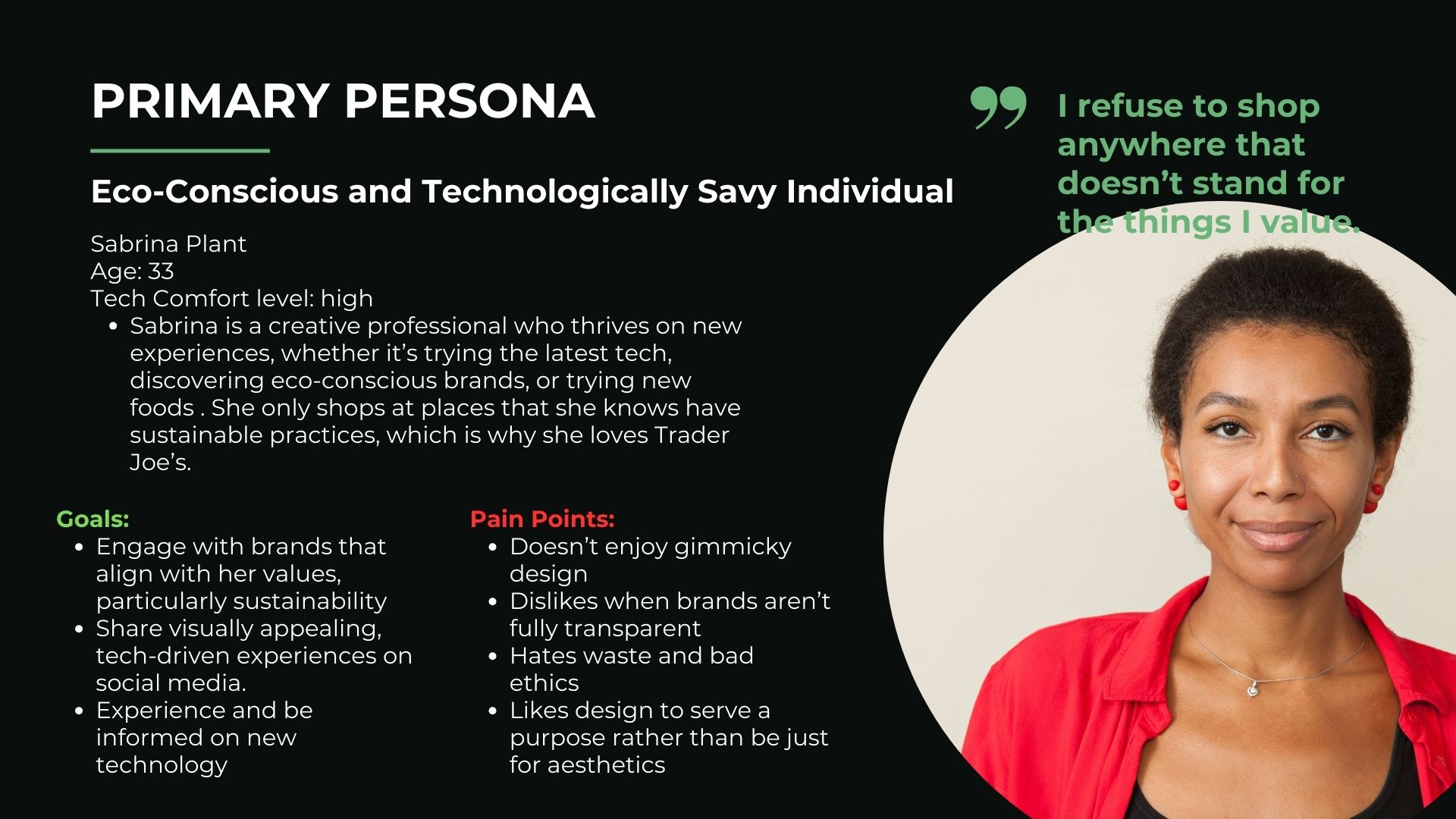
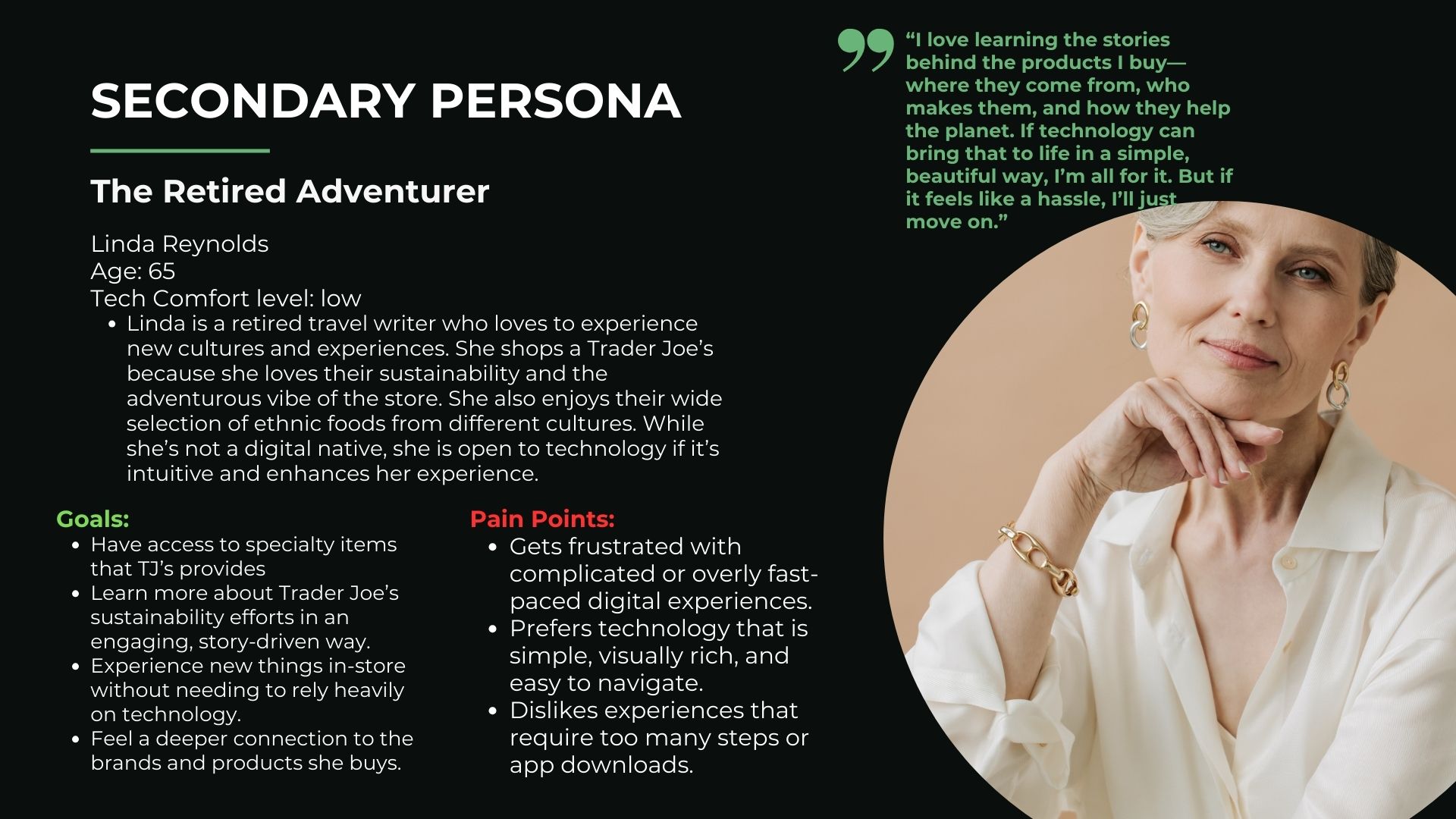
Early in the design process, user personas revealed two key insights:
Visitors were excited by discovery and storytelling, but had very different comfort levels with technology.
Some users, like younger creative professionals, expected an experience that felt seamless, modern, and shareable. Others, like retired adventurers, valued simplicity, warmth, and intuitive design that didn’t require technical skill.
These insights helped me frame a clear design direction: the installation needed to deliver a layered, story-driven experience that invited curiosity without creating friction. Instead of relying on touchscreens, apps, or complex navigation, I used projection mapping to animate real-world Trader Joe’s objects. This kept the interaction lightweight and intuitive, while still allowing depth and richness for users who wanted to engage more deeply.
Designing for this balance — offering discovery for tech-savvy users and approachability for less tech-comfortable visitors — allowed me to create an experience that felt inclusive, engaging, and true to Trader Joe’s playful, handmade brand identity.
Early in the design process, user personas revealed two key insights:
Visitors were excited by discovery and storytelling, but had very different comfort levels with technology.
Some users, like younger creative professionals, expected an experience that felt seamless, modern, and shareable. Others, like retired adventurers, valued simplicity, warmth, and intuitive design that didn’t require technical skill.
These insights helped me frame a clear design direction: the installation needed to deliver a layered, story-driven experience that invited curiosity without creating friction. Instead of relying on touchscreens, apps, or complex navigation, I used projection mapping to animate real-world Trader Joe’s objects. This kept the interaction lightweight and intuitive, while still allowing depth and richness for users who wanted to engage more deeply.
Designing for this balance — offering discovery for tech-savvy users and approachability for less tech-comfortable visitors — allowed me to create an experience that felt inclusive, engaging, and true to Trader Joe’s playful, handmade brand identity.
Early in the design process, user personas revealed two key insights:
Visitors were excited by discovery and storytelling, but had very different comfort levels with technology.
Some users, like younger creative professionals, expected an experience that felt seamless, modern, and shareable. Others, like retired adventurers, valued simplicity, warmth, and intuitive design that didn’t require technical skill.
These insights helped me frame a clear design direction: the installation needed to deliver a layered, story-driven experience that invited curiosity without creating friction. Instead of relying on touchscreens, apps, or complex navigation, I used projection mapping to animate real-world Trader Joe’s objects. This kept the interaction lightweight and intuitive, while still allowing depth and richness for users who wanted to engage more deeply.
Designing for this balance — offering discovery for tech-savvy users and approachability for less tech-comfortable visitors — allowed me to create an experience that felt inclusive, engaging, and true to Trader Joe’s playful, handmade brand identity.
What would the experience be like?
What would the experience be like?
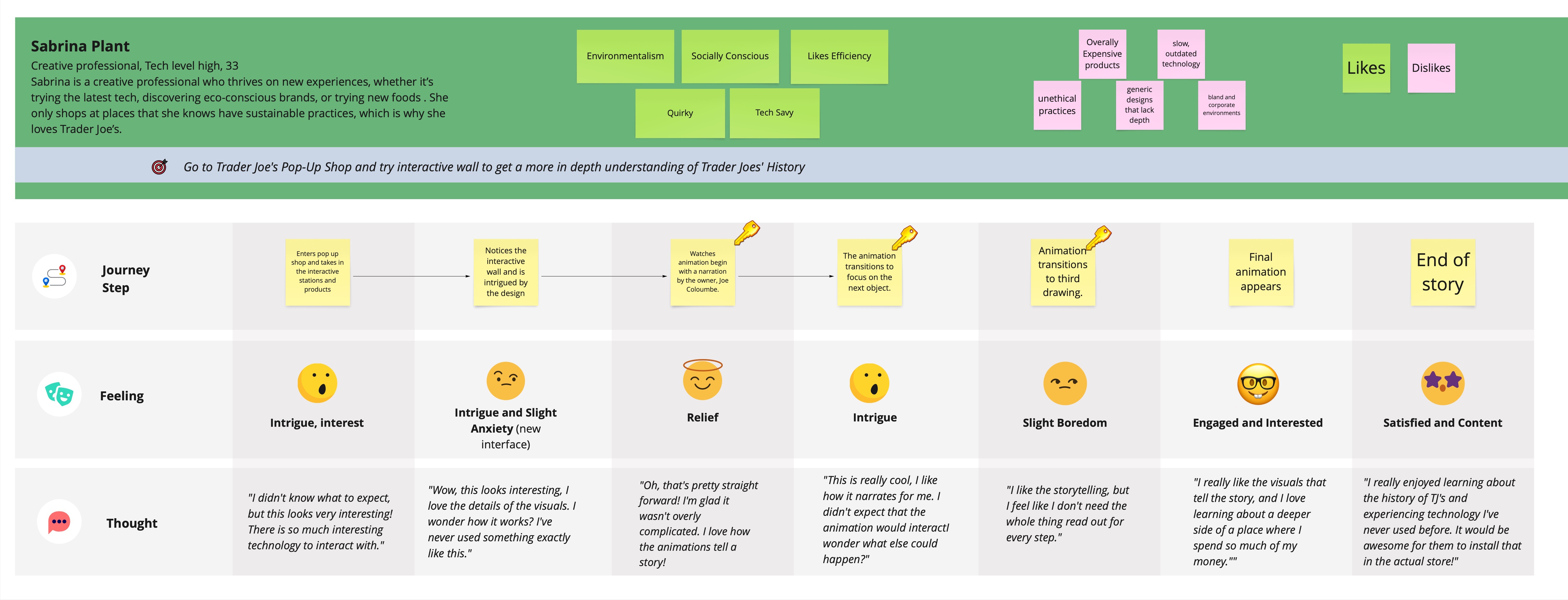
Using a user journey, I was able to map the experience and identify potential pain points. From this, I was able to determine that it was crucial to create an engaging start and followthrough that did not leave users bored.
Using a user journey, I was able to map the experience and identify potential pain points. From this, I was able to determine that it was crucial to create an engaging start and followthrough that did not leave users bored.
From this research, I discovered three main findings:
From this research, I discovered three main findings:
Customers were drawn in by the store’s unique atmosphere and and it's hands-on customer service.
Customers recognized certain factors that contributed to Trader Joe's success, including their commitment to organic products and sustainable practices
Many enjoyed the neighborly and authentic charm of the store.
Customers were drawn in by the store’s unique atmosphere and and it's hands-on customer service.
Customers recognized certain factors that contributed to Trader Joe's success, including their commitment to organic products and sustainable practices
Many enjoyed the neighborly and authentic charm of the store.
Using these insights, I had to craft a story.
Using these insights, I had to craft a story.
To address each insight, I decided to divide the animation into three sections focused around a different product.
To address each insight, I decided to divide the animation into three sections focused around a different product.
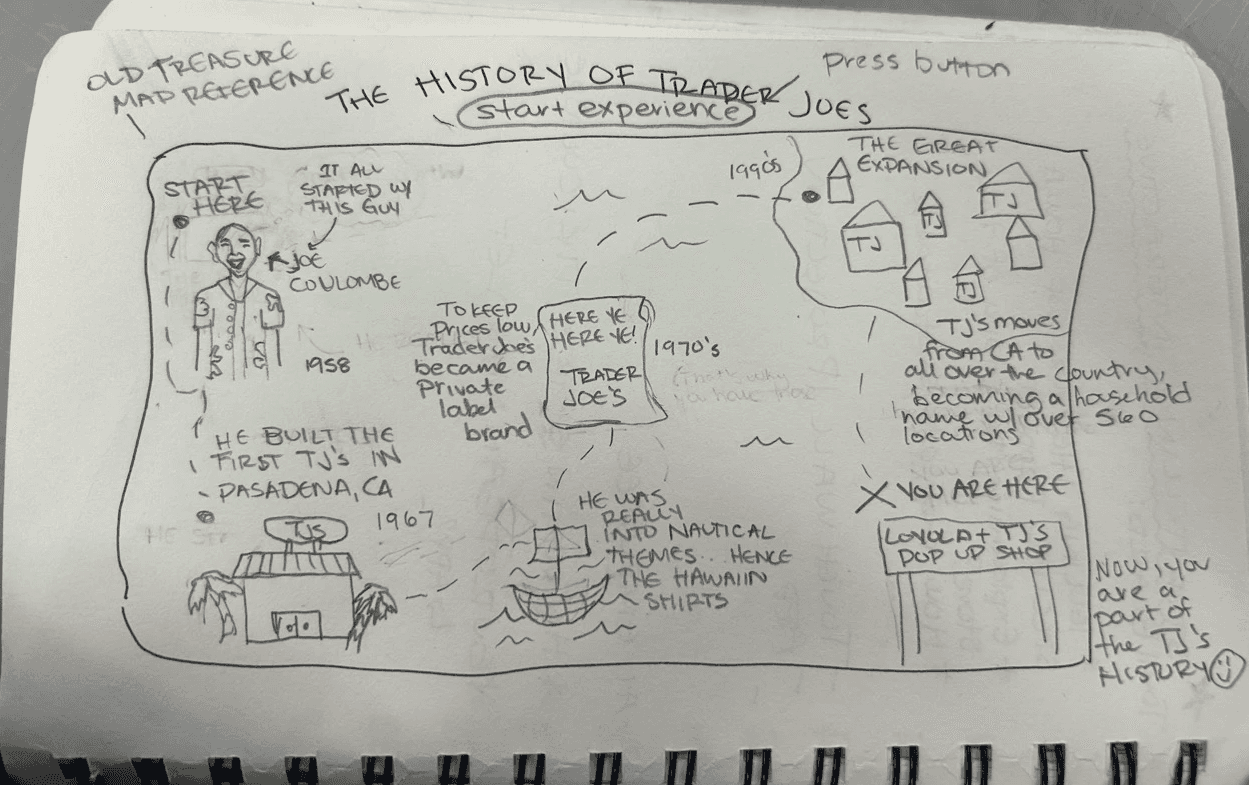
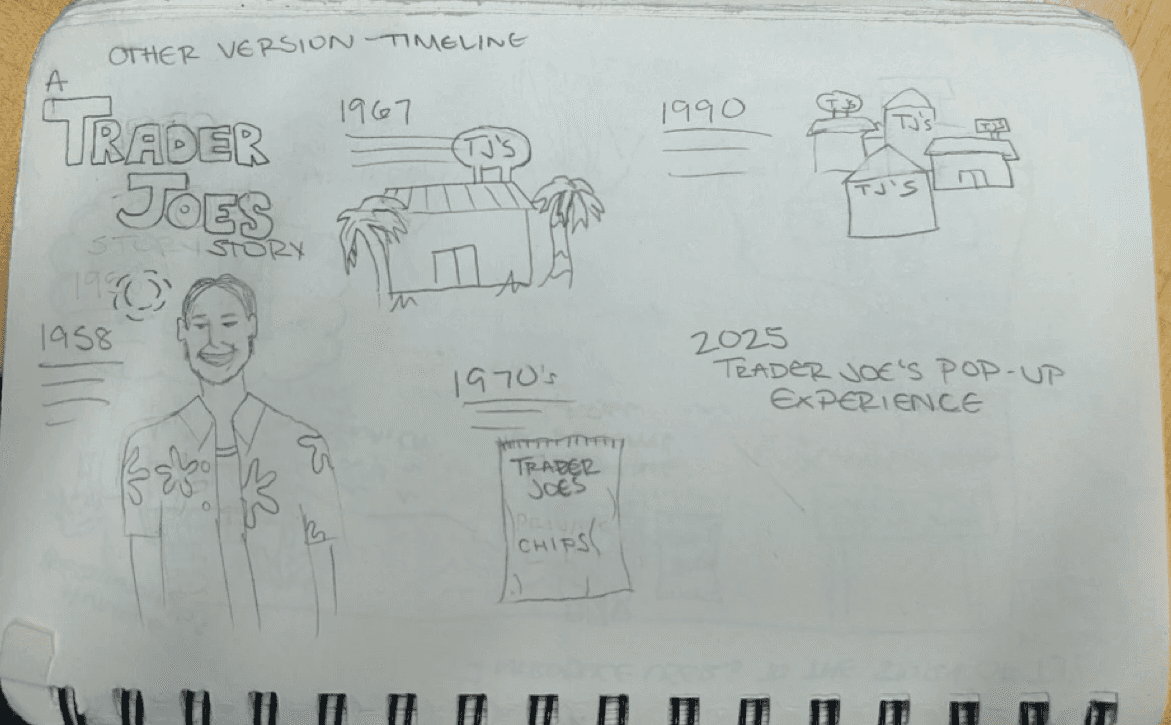
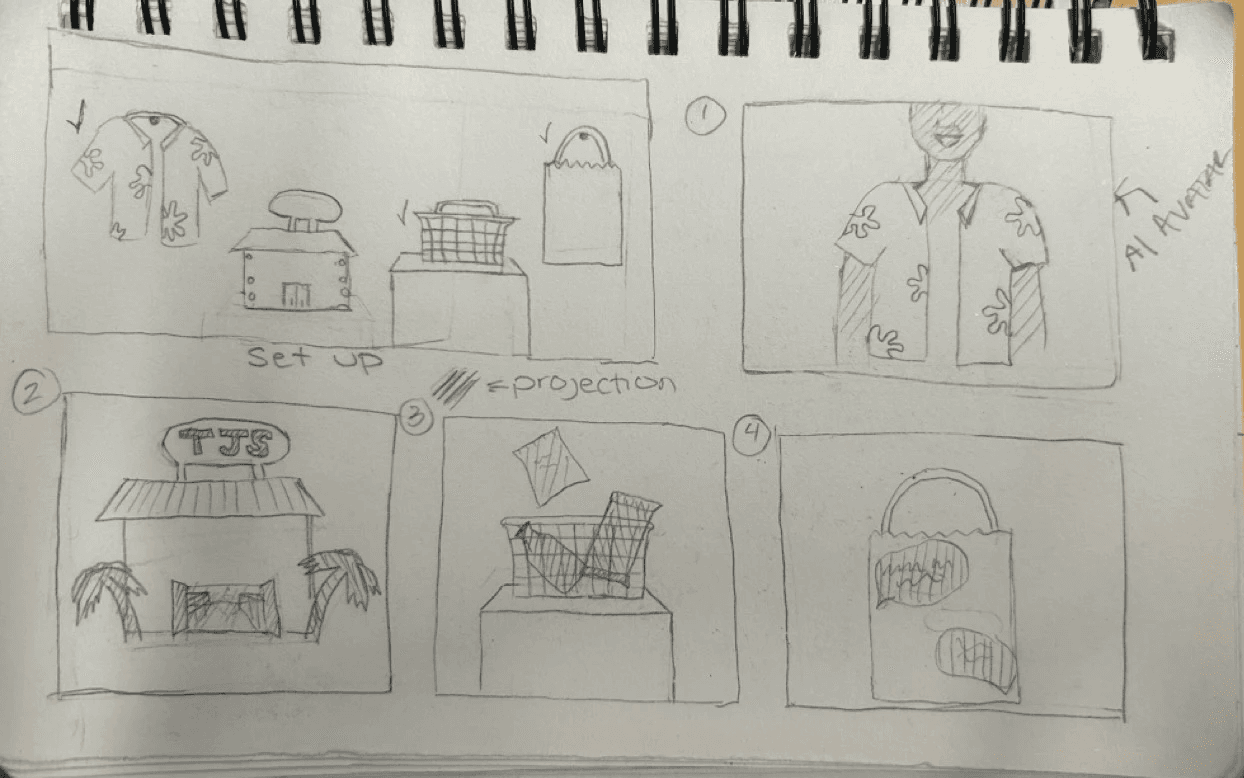
These are my initial sketches of options of scenes for projection mapping digital story onto physical objects. Initially, I thought of making a more literal timeline of Trader Joe's using wall vinyl.
The second sketch aligns more with the direction I chose to take, which was a more display set up.
These are my initial sketches of options of scenes for projection mapping digital story onto physical objects. Initially, I thought of making a more literal timeline of Trader Joe's using wall vinyl.
The second sketch aligns more with the direction I chose to take, which was a more display set up.
Bringing the Motion to Life
Bringing the Motion to Life
To address each insight, I decided to divide the animation into three sections focused around a different product.
To address each insight, I decided to divide the animation into three sections focused around a different product.
Scene 1: Meet the founder
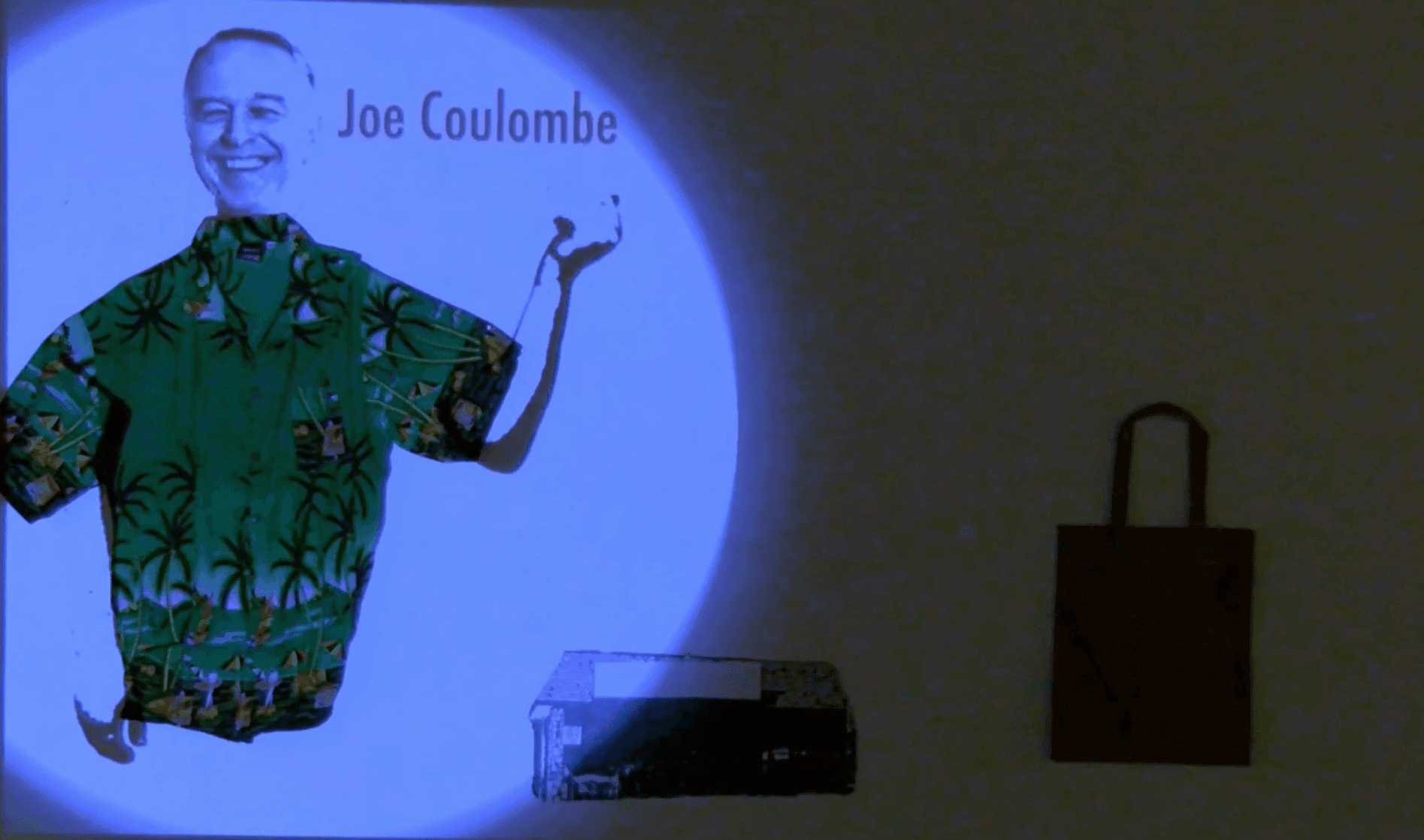
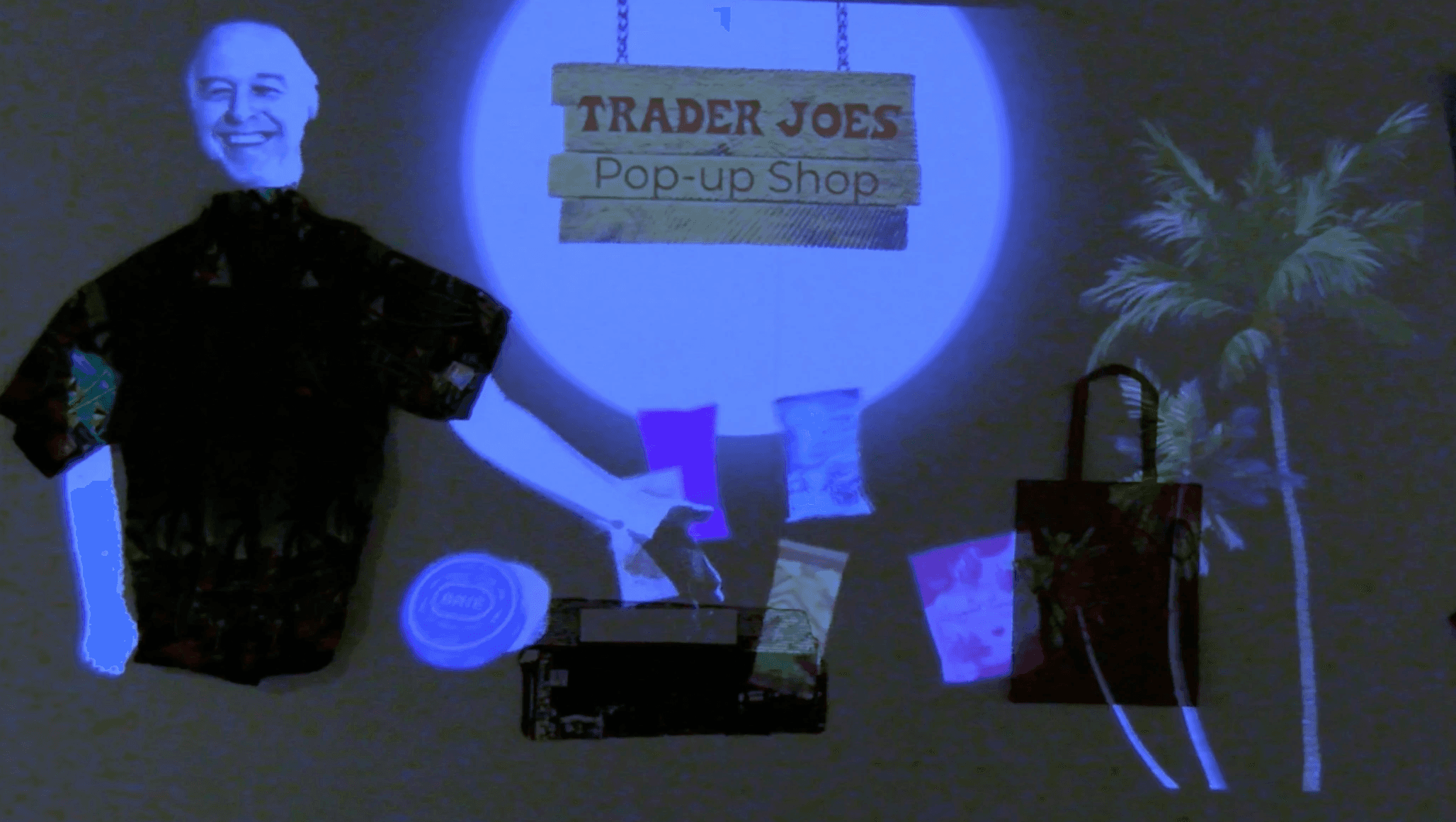
This scene introduces the founder of Trader Joe's, Joe Coulombe. He guides the story of Trader Joe's origins through voice narration. By using the physical Hawaiian shirt that people of authority wear at Trader Joe's and Joe's head, I made clear the significance of Joe Coulombe to the story.
Scene 1: Meet the founder
This scene introduces the founder of Trader Joe's, Joe Coulombe. He guides the story of Trader Joe's origins through voice narration. By using the physical Hawaiian shirt that people of authority wear at Trader Joe's and Joe's head, I made clear the significance of Joe Coulombe to the story.
Scene 2: Origins of your favorite neighborhood store
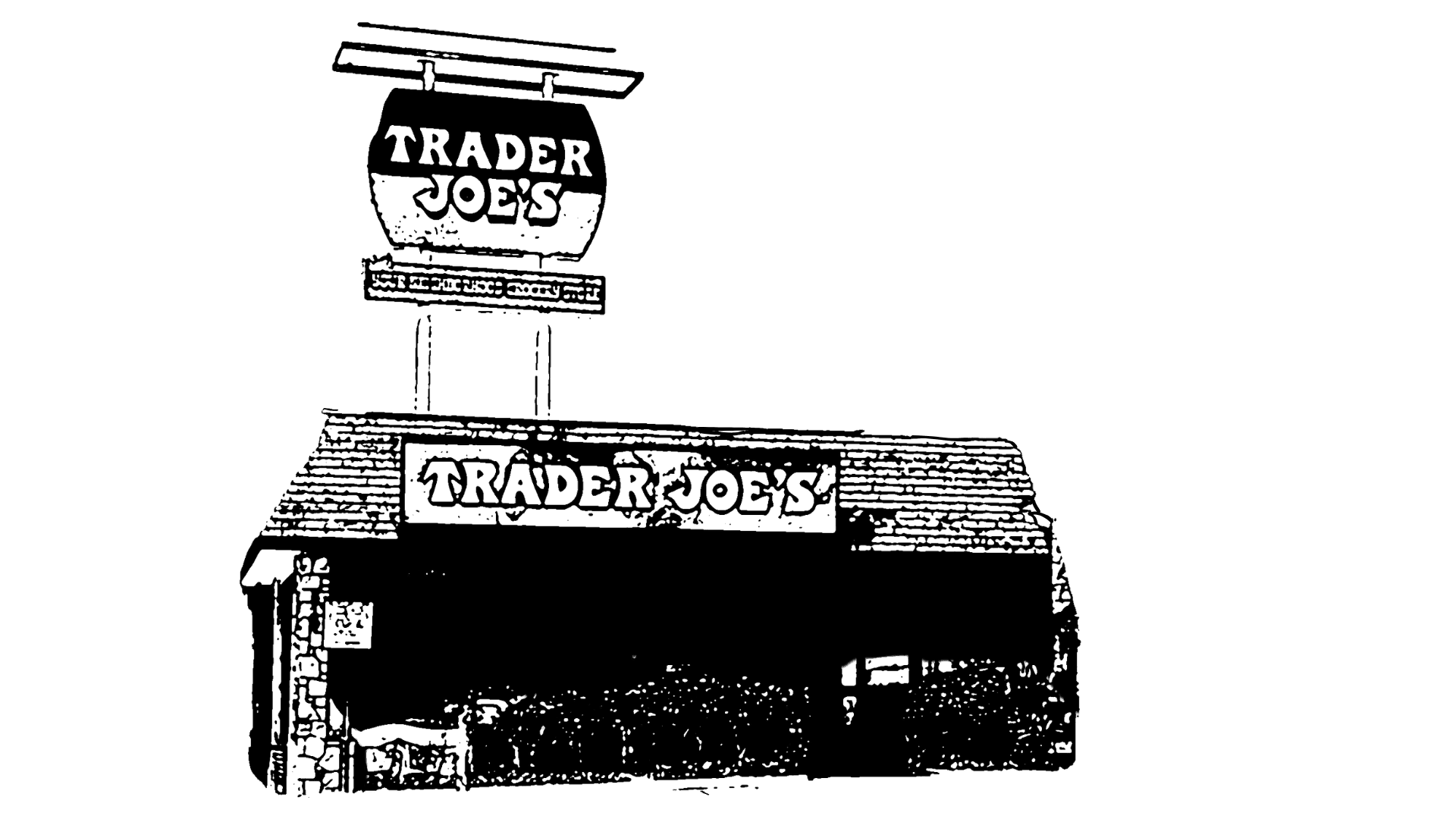
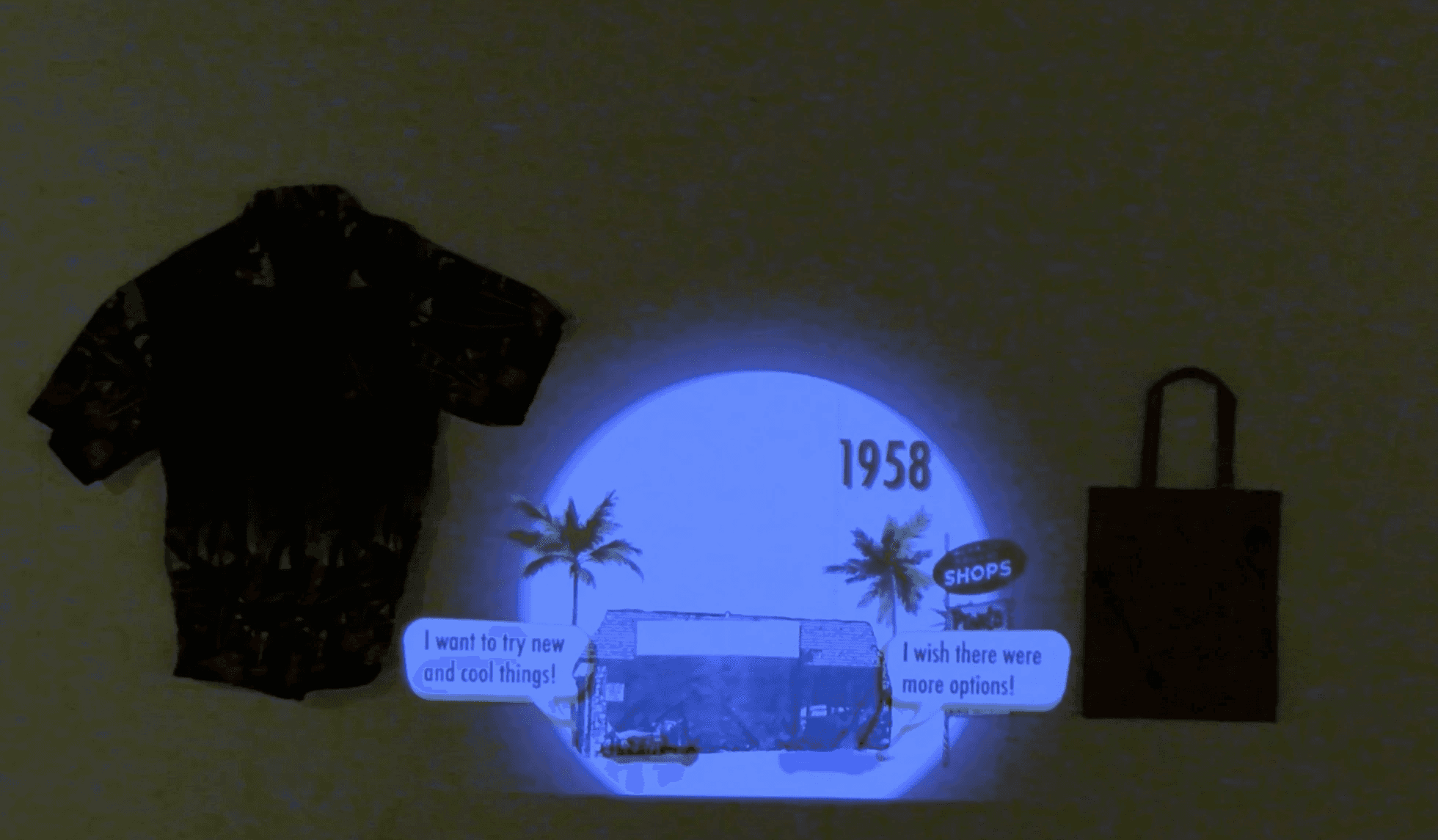
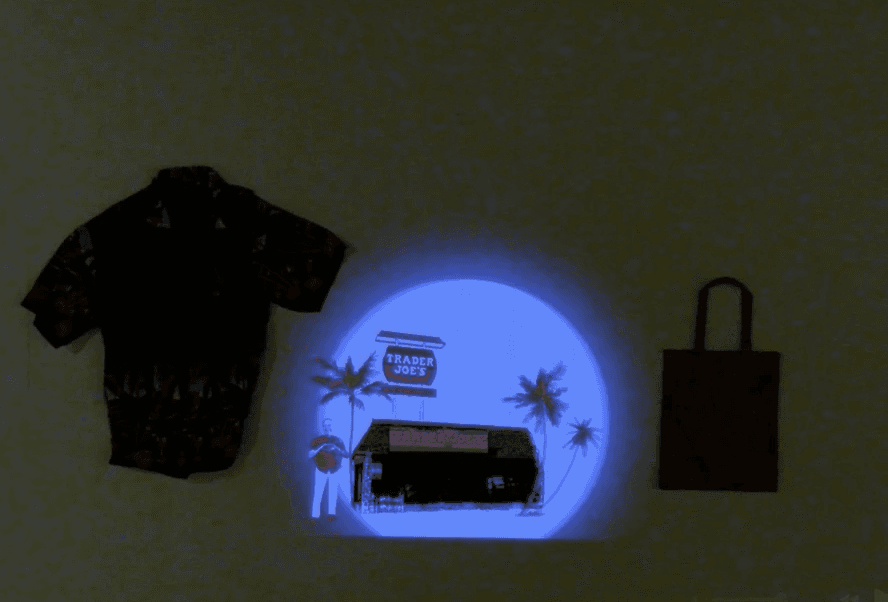
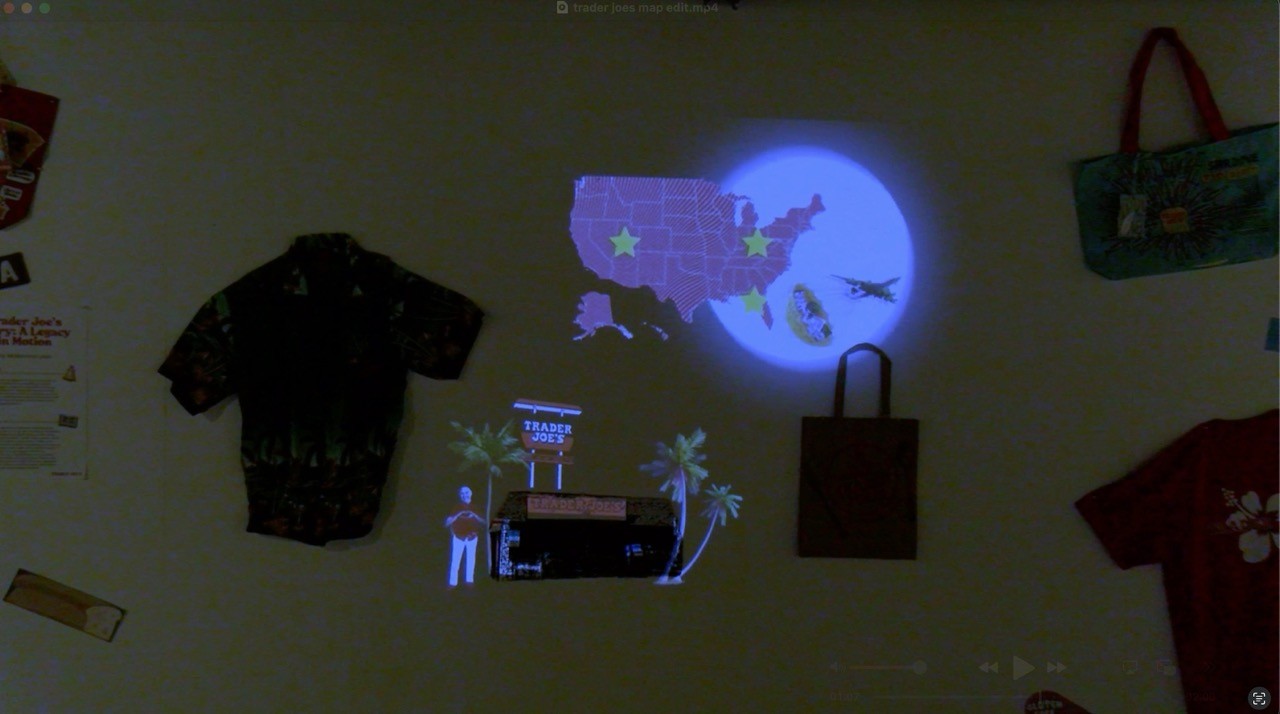
In this section, you learn about the first Trader Joe's store, which was originally called Pronto Market. Using the physical cut out, the user is able to visualize the transformation of Trader Joe's over time.
Scene 2: Origins of your favorite neighborhood store
In this section, you learn about the first Trader Joe's store, which was originally called Pronto Market. Using the physical cut out, the user is able to visualize the transformation of Trader Joe's over time.
Scene 3: The Trader Joe's way
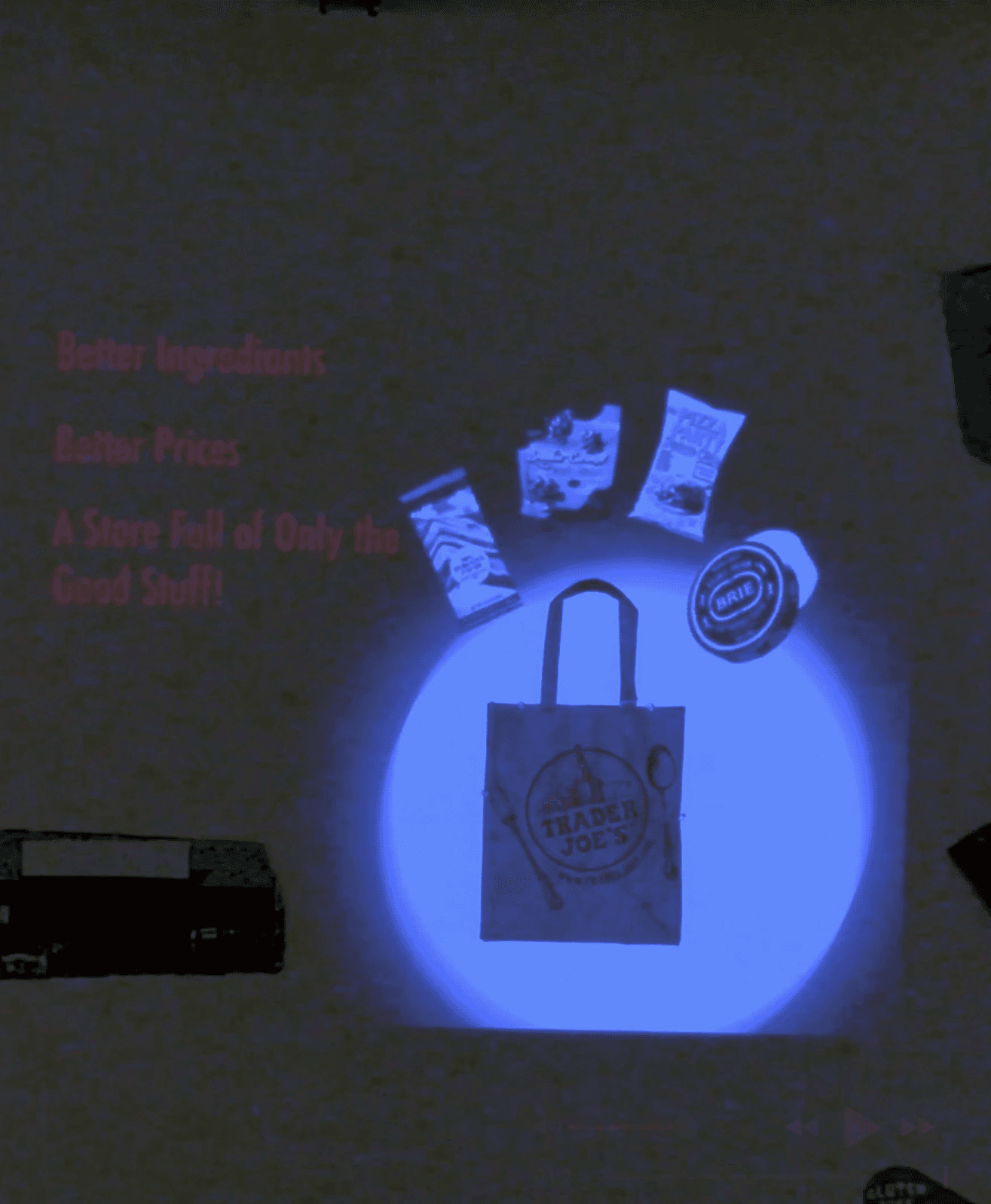
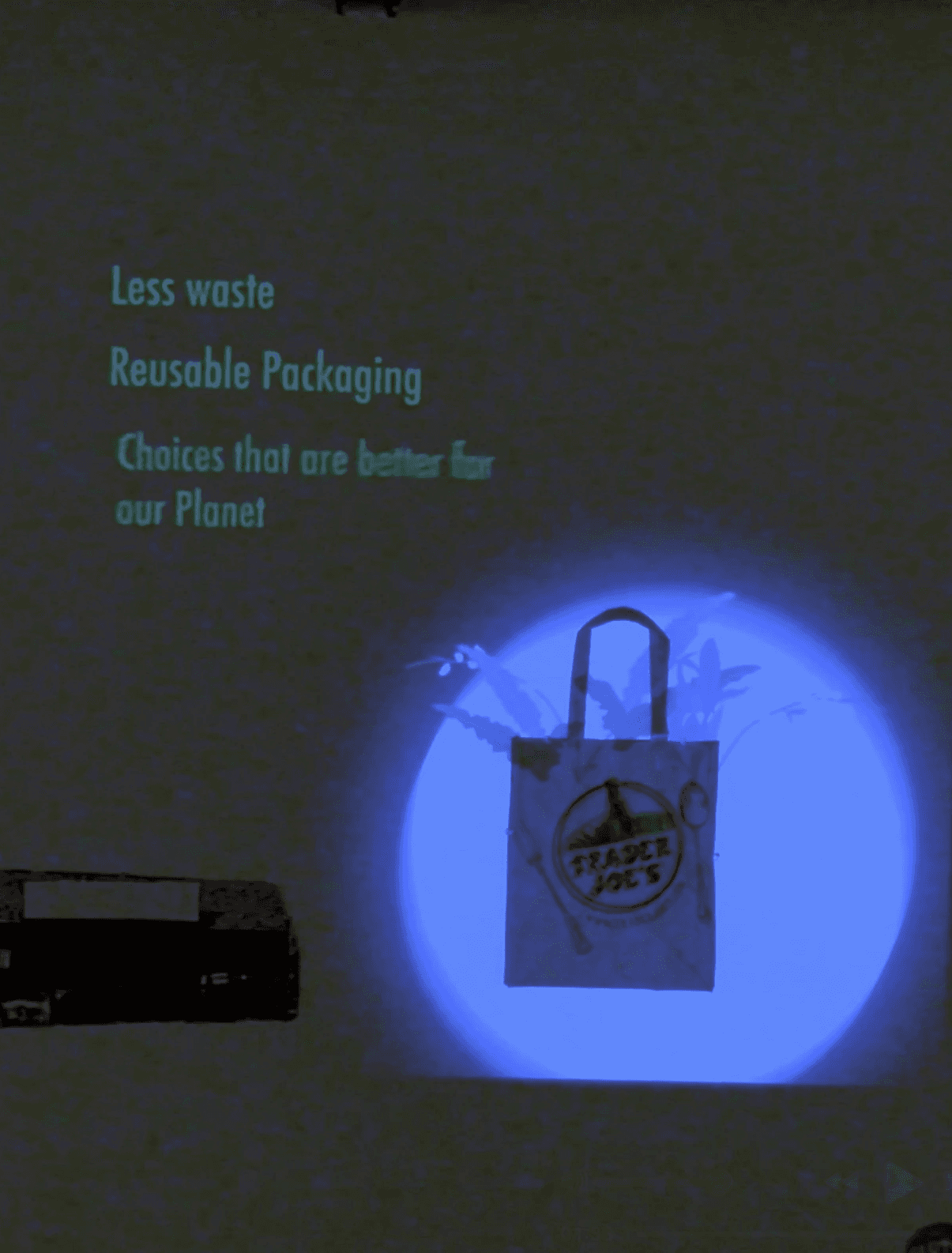
The final sequence explains how Trader Joe's became the store it is today, highlighting their key values of sustainability and brand authenticity. The shopping bag and digital overlay of plants and products showcases the brand's focus on sustainable practices being at the forefront of their mission, as well as providing high quality specialty products.
Scene 3: The Trader Joe's way
The final sequence explains how Trader Joe's became the store it is today, highlighting their key values of sustainability and brand authenticity. The shopping bag and digital overlay of plants and products showcases the brand's focus on sustainable practices being at the forefront of their mission, as well as providing high quality specialty products.
The Tools:
The Tools:


Physical objects:
Hawaiian Shirt
Trader Joe's store cut out
Trader Joe's shopping bag
Physical objects:
Hawaiian Shirt
Trader Joe's store cut out
Trader Joe's shopping bag
Animation and Mapping:
Animation and Mapping:
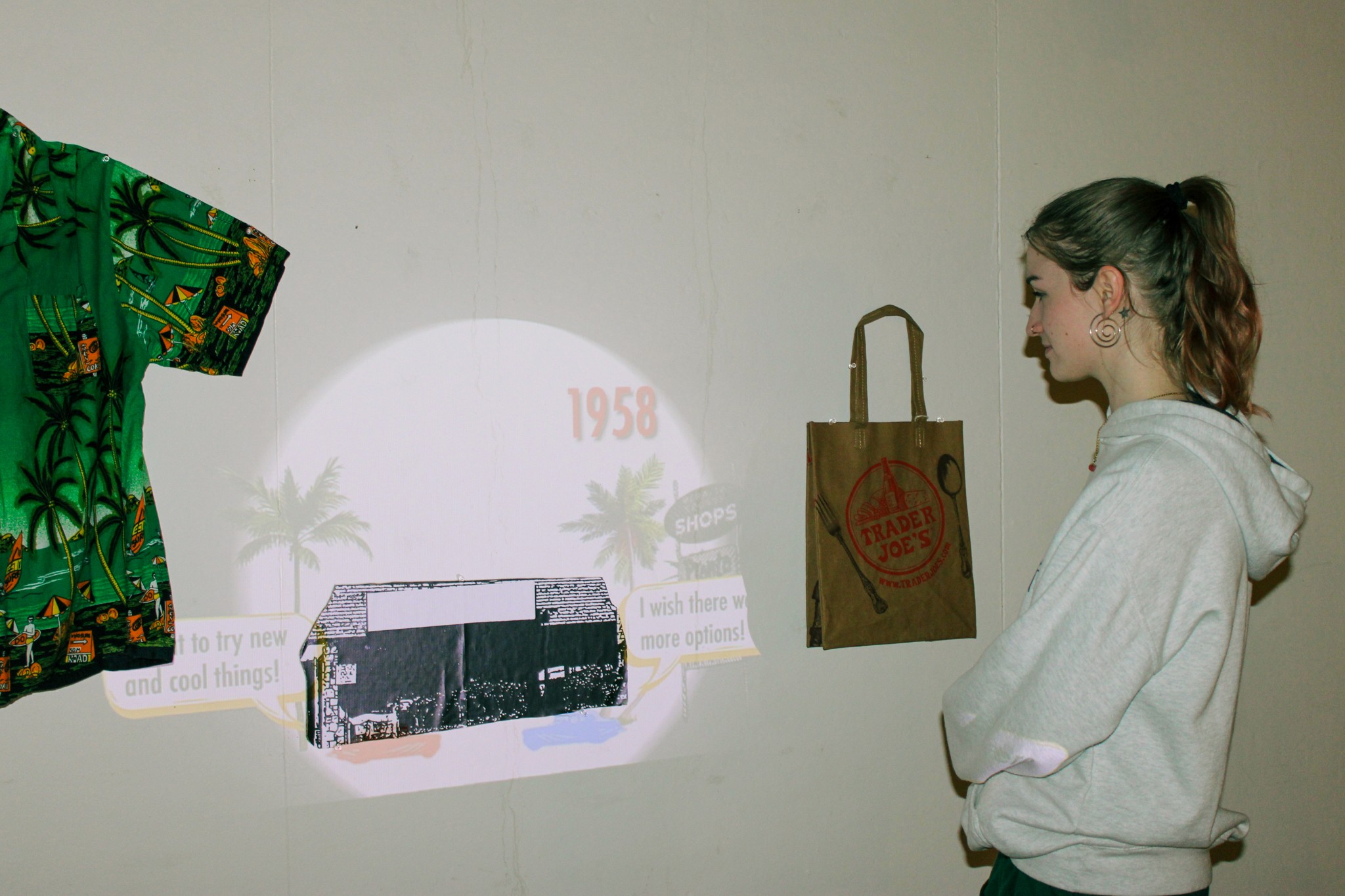
I created layered animations using After Effects and mapped them onto physical surfaces using a projector. This took many tests and trial runs in order to get everything mapped seamlessly without projection mapping software.
I created layered animations using After Effects and mapped them onto physical surfaces using a projector. This took many tests and trial runs in order to get everything mapped seamlessly without projection mapping software.
An Immersive Narrative
An Immersive Narrative
The final installation featured three looping animations, each projected onto a Trader Joe’s object and telling a distinct part of the brand’s journey. Viewers were invited to walk from one object to the next, watching the story unfold in a museum-style format. The experience didn’t require interaction—just presence, curiosity, and a bit of wonder.
The final installation featured three looping animations, each projected onto a Trader Joe’s object and telling a distinct part of the brand’s journey. Viewers were invited to walk from one object to the next, watching the story unfold in a museum-style format. The experience didn’t require interaction—just presence, curiosity, and a bit of wonder.
User Feedback
I ran tests with classmates and faculty. Users loved the playful tone but made suggestions on changing certain styles and transitions for clarity and visibility, which was implemented in the final version.
"This is so much better than just having to read about the history of paper. It felt like a movie that I got to enjoy rather than an information dump."
"I loved learning the history of Trader Joe's in such a unique way. It was something totally different that I had never experienced before."
User Feedback
I ran tests with classmates and faculty. Users loved the playful tone but made suggestions on changing certain styles and transitions for clarity and visibility, which was implemented in the final version.
"This is so much better than just having to read about the history of paper. It felt like a movie that I got to enjoy rather than an information dump."
"I loved learning the history of Trader Joe's in such a unique way. It was something totally different that I had never experienced before."
Reflection
Reflection
This project pushed me to think beyond screens and traditional interfaces. It challenged me to approach UX from a broader perspective — blending narrative structure, motion design, and environmental interaction into a physical, immersive experience. Rather than guiding users through buttons and menus, I had to design a journey that felt natural, intuitive, and emotionally resonant in a shared, real-world space.
Working with projection mapping and physical storytelling forced me to consider how people move, explore, and engage with their surroundings, not just their devices. Every decision, from the visual pacing to the choice of materials, had to support an experience that was both playful and meaningful, aligning with Trader Joe’s handmade, quirky spirit.
Most importantly, this project reinforced my belief that great design doesn’t always need to live on a screen. Sometimes the most powerful experiences are the ones that feel human, tactile, and light — even if they’re as simple as a story printed on a paper bag.
This project pushed me to think beyond screens and traditional interfaces. It challenged me to approach UX from a broader perspective, blending narrative structure, motion design, and environmental interaction into a physical, immersive experience. Rather than guiding users through buttons and menus, I had to design a journey that felt natural, intuitive, and emotionally resonant in a shared, real-world space.
Working with projection mapping and physical storytelling forced me to consider how people move, explore, and engage with their surroundings, not just their devices. Every decision, from the visual pacing to the choice of materials, had to support an experience that was both playful and meaningful, aligning with Trader Joe’s handmade, quirky spirit.
Most importantly, this project reinforced my belief that great design doesn’t always need to live on a screen. Sometimes the most powerful experiences are the ones that feel human, tactile, and light, even if they’re as simple as a story printed on a paper bag.
Photos credited to Shae Schouest
Photos credited to Shae Schouest
Hungry for more? Check out my other work!
Hungry for more?
Check out my other work!
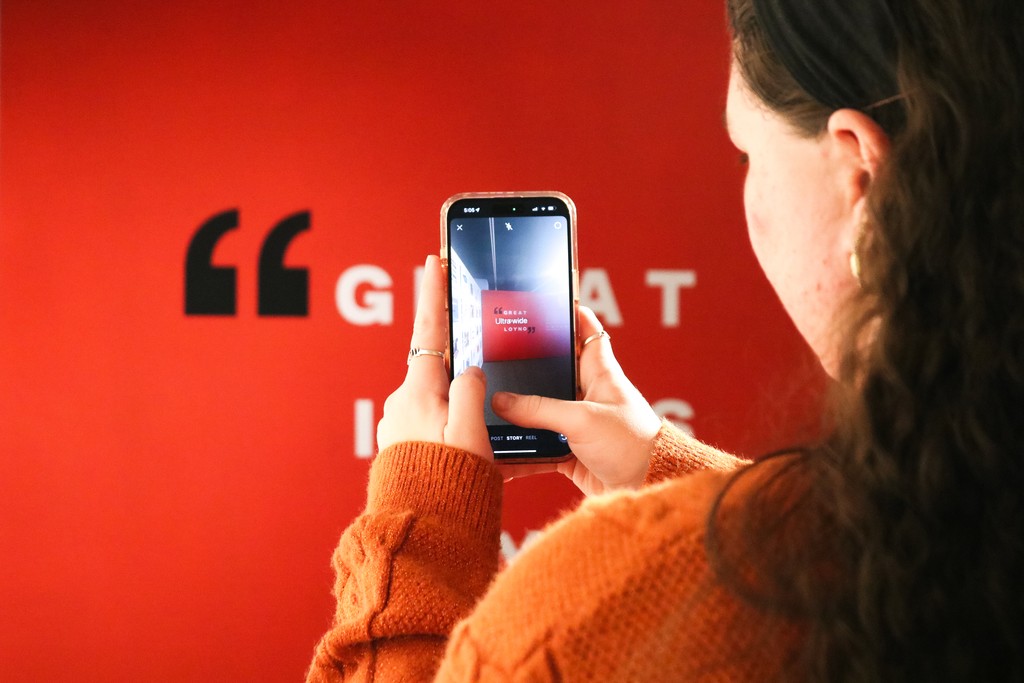
Great Ideas of Humanity
Exhibition Experience
UX/UI Design
A digital companion to the Design Museum of Chicago's Exhibition Great Ideas of Humanity, offering visitors addition information to the posters on display.
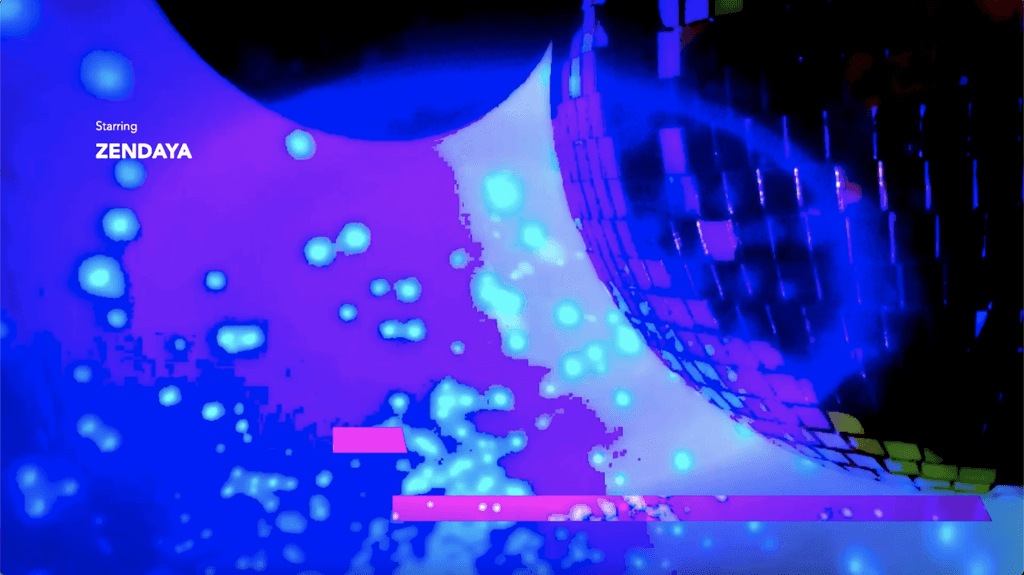
Euphoria Opening Sequence
Opening Title Design
A homework help mobile app that allows you to connect with fellow peers and find course
specific resources.
Great Ideas of Humanity
Exhibition Experience
UX/UI Design
A digital companion to the Design Museum of Chicago's Exhibition Great Ideas of Humanity, offering visitors addition information to the posters on display.
Euphoria Opening Sequence
Opening Title Design
A homework help mobile app that allows you to connect with fellow peers and find course
specific resources.
Great Ideas of Humanity
Exhibition Experience
UX/UI Design
A digital companion to the Design Museum of Chicago's Exhibition Great Ideas of Humanity, offering visitors addition information to the posters on display.