mappeD
A senior capstone project, "mappeD" is a projection mapping brand experience for the Diboll Design Center. Through thoughtful UX design, motion, and environmental storytelling, the project transforms a quiet and often overlooked space into one that feels more welcoming, accessible, and connected to the creative community within it.
Timeline: January - May 2026
The Diboll Design Center is home to a wide range of creative activity, yet much of the innovation and student work within the space goes unnoticed by visitors and the broader community. This project explores how interactive and experiential design can elevate the identity of the Design Center by showcasing its creativity, culture, and student achievements in a more engaging and memorable way, strengthening its presence both within Loyola and beyond.
The Challenge:
How do we elevate the Diboll Design Center's current brand identity to reflect the energy and innovation of the design department?
From conception to prototyping in 10 weeks
Week 1-2:
Understanding the Problem
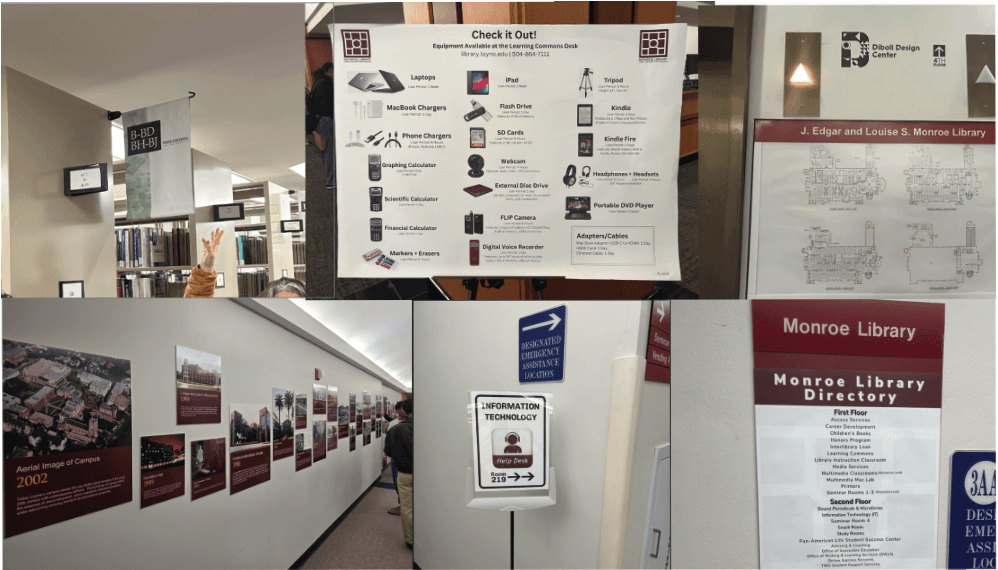
The Diboll Design Center operates within the quiet, visually static environment of Monroe Library, where consistent signage and neutrality encourage perceptual filtering. As a result, the gallery’s presence blends into its surroundings and does not clearly signal itself as an active, evolving space. This limits its ability to communicate the experimental and contemporary nature of the Loyola Design Department.
*Perceptual Filtering: The cognitive process where people unconsciously ignore information in their environment that they have learned is not immediately relevant to their goals. Because the brain is constantly exposed to large amounts of visual, auditory, and sensory information, it filters out familiar or repetitive stimuli to reduce mental effort and maintain focus.
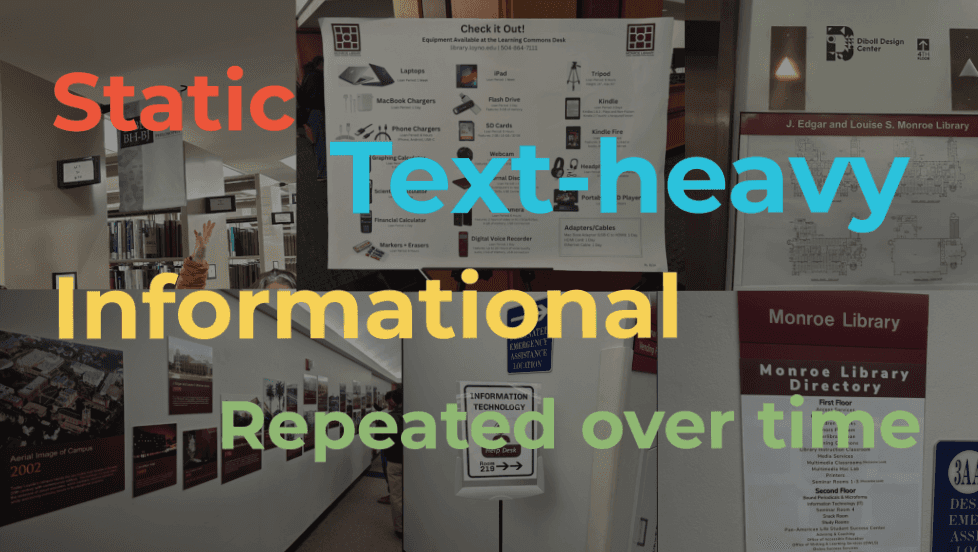
Understanding the User
Through Mary's persona, a clear pattern emerged: students navigating familiar campus environments unconsciously filter out static visual information, revealing a disconnect between the Design Center's creative activity and its ability to capture attention. This insight became the foundation for exploring more dynamic and immersive forms of brand communication.

Research revealed that many students move through campus environments with a clear purpose and often filter out static visual elements that do not feel immediately relevant to their needs. Mary, a frequent library user, demonstrated how repeated exposure to signage, posters, and wall graphics can lead to perceptual fatigue, causing important information and opportunities to go unnoticed. While she is highly engaged in campus life, she primarily discovers events and experiences when they are visually dynamic, socially recommended, or impossible to ignore.
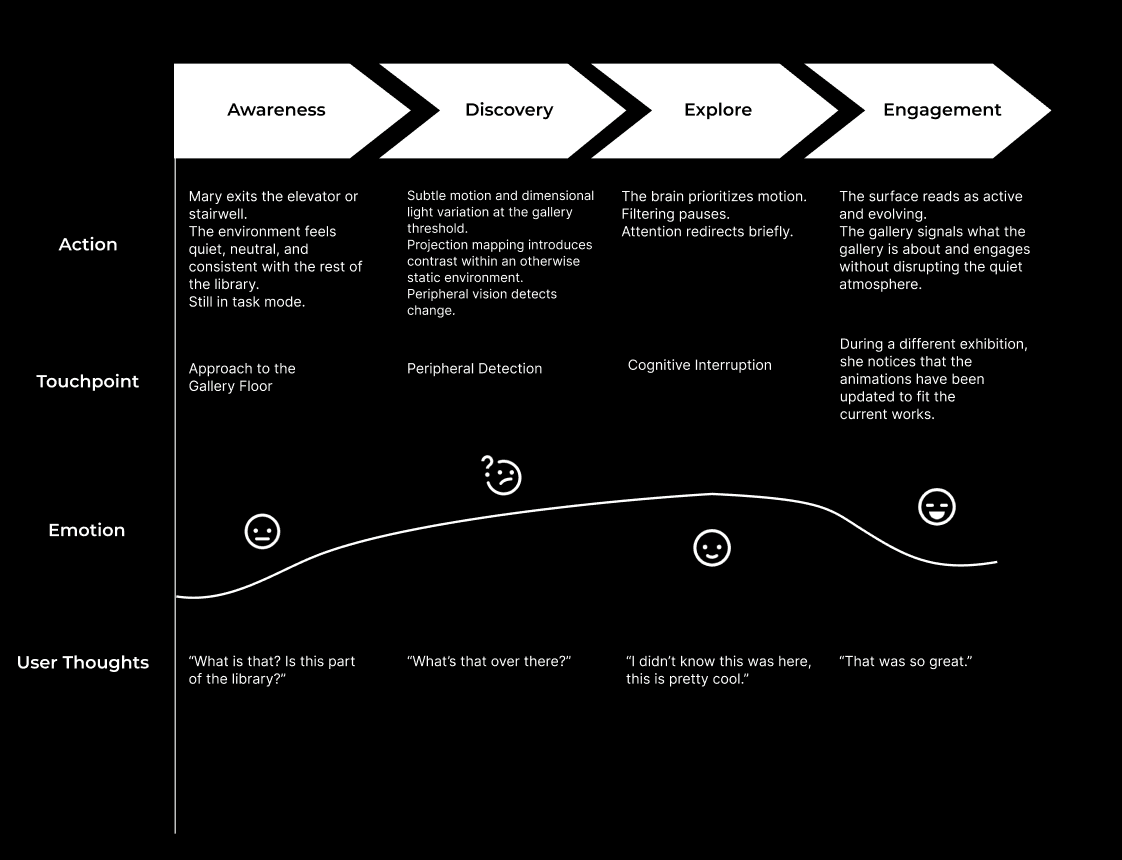
This insight became a central driver for mappeD. Rather than relying on traditional signage or passive communication, the project explores how motion, projection, and immersive storytelling can break through visual neutrality and capture attention in meaningful ways. By creating a living, evolving brand presence for the Diboll Design Center, MappeD aims to transform overlooked spaces into engaging experiences that encourage curiosity, discovery, and deeper connections with the design community.
Week 3:
Iterations
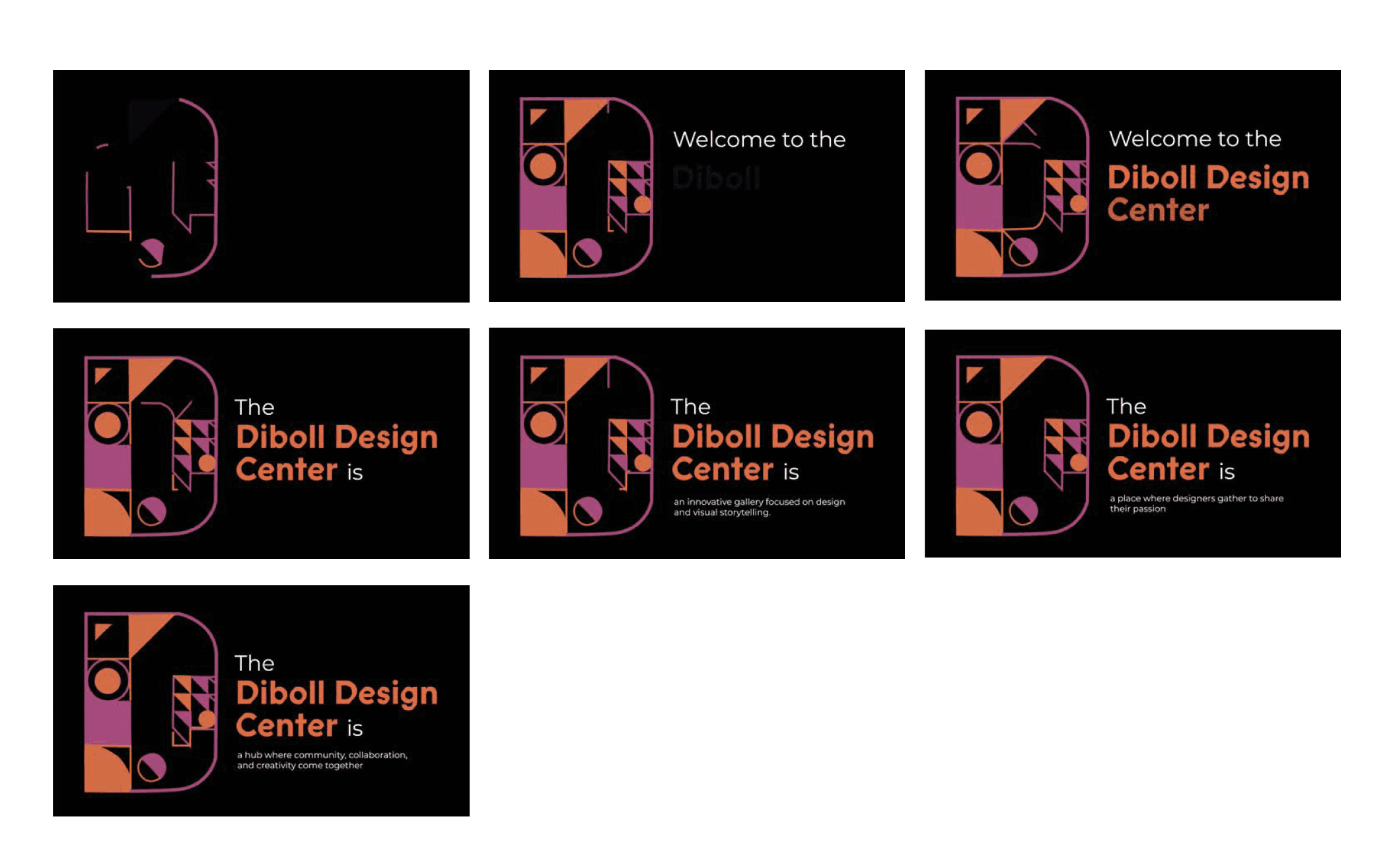
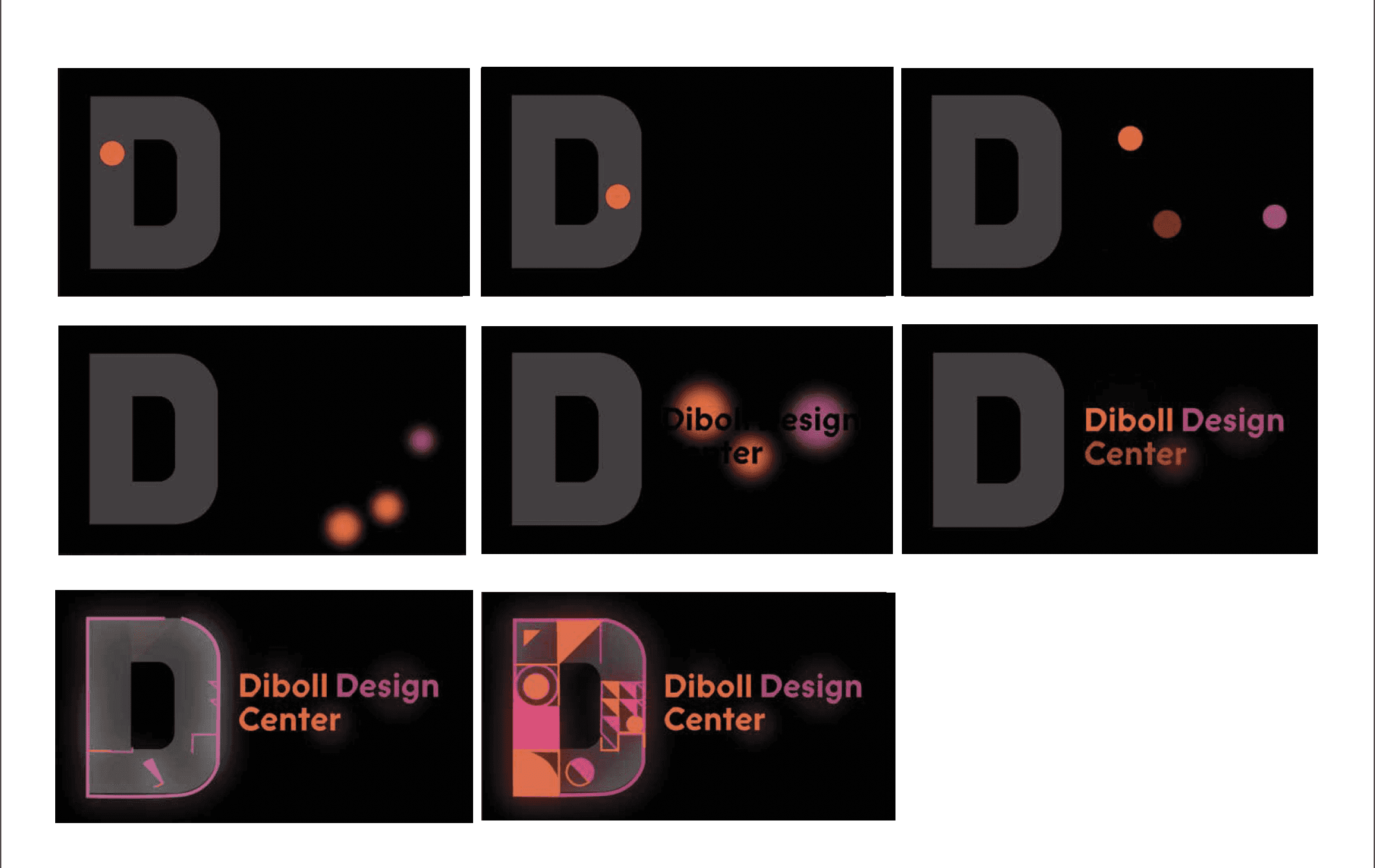
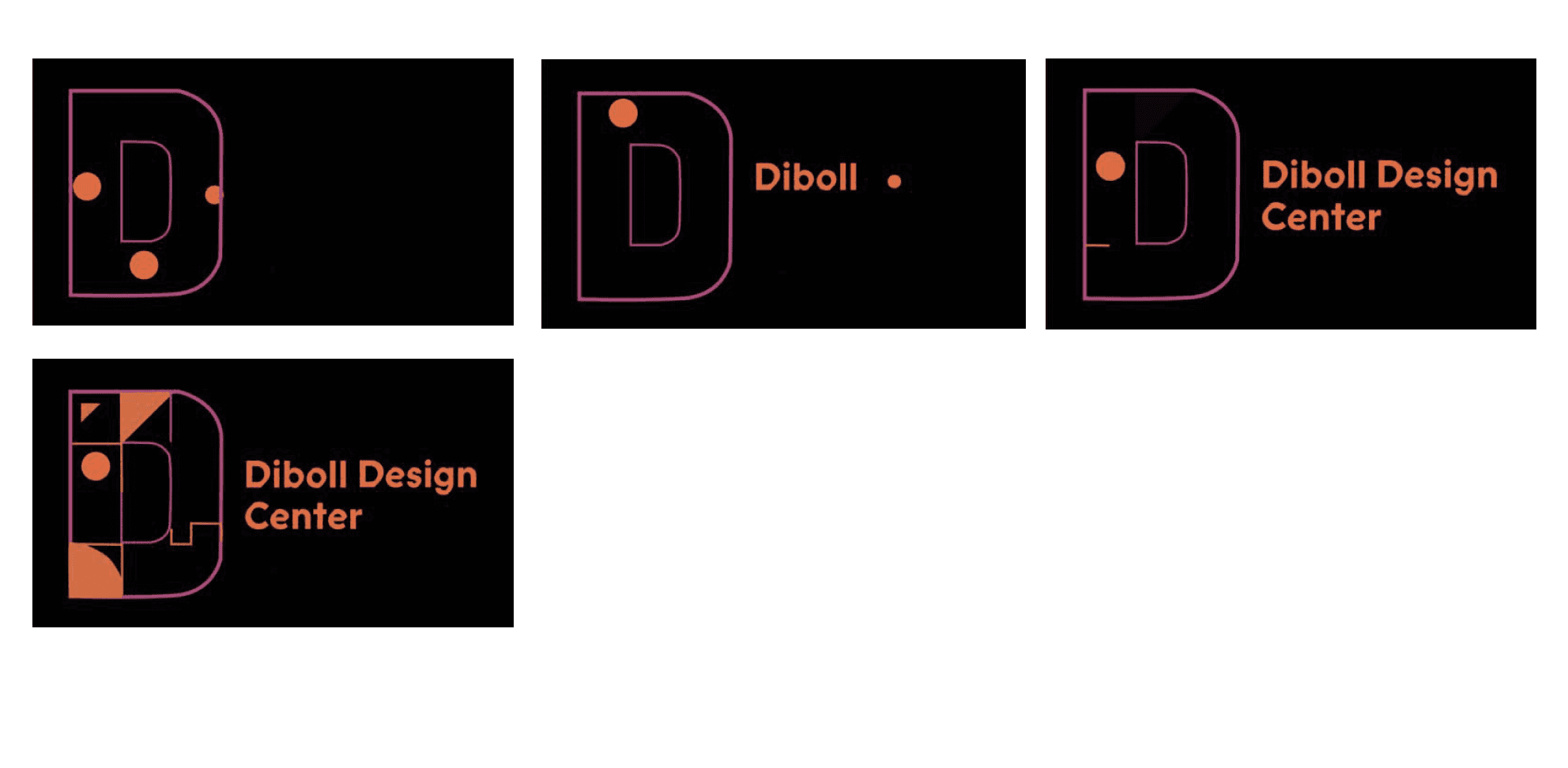
After diving into the research, I began exploring possible ways to combine physical objects with animated visuals in a way that is stimulating and exciting.
Week 3:
More Iterations + 3D Modeling
I kept exploring more iterations that better utilized the space outside of the physical "D" as well as exhibit
specific animations.

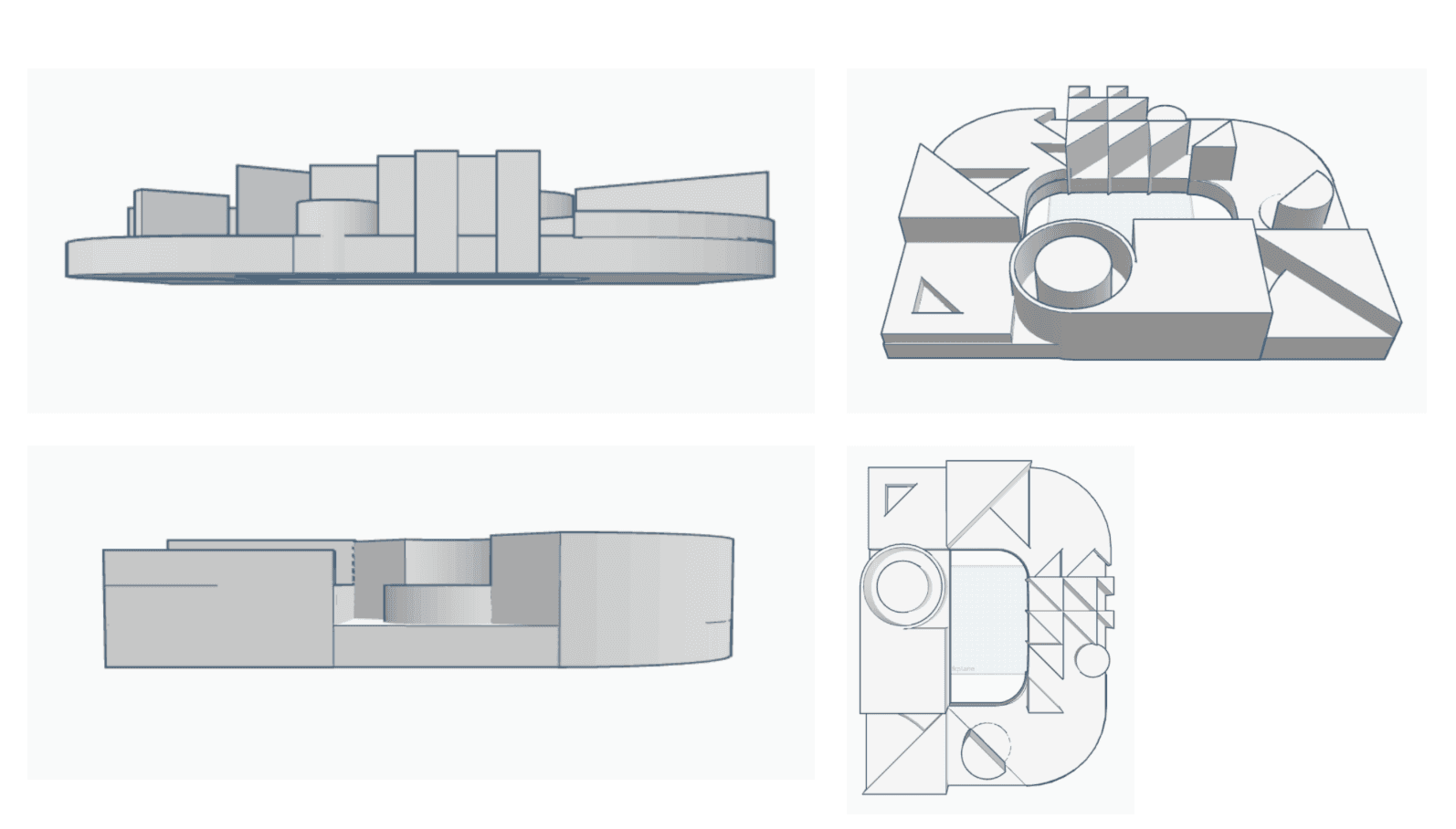
Early 3D Models